

 Tiếng Việt
Exporting Fresh Carrots: Quality Control, Batch Selection, Inspection, and Traceability Process
📝 Introduction
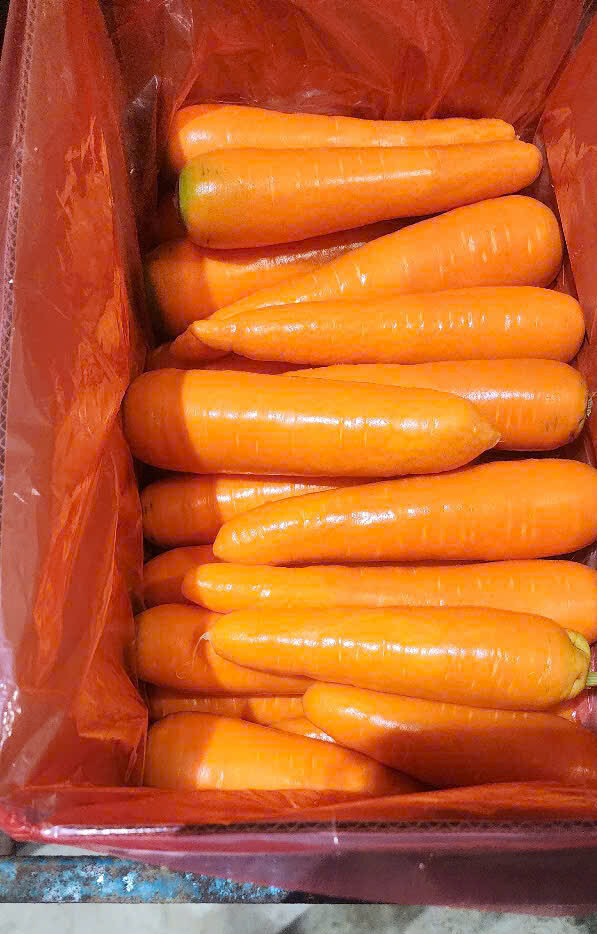
In the agricultural export industry, fresh carrots represent a high-potential market but come with significant risks. Unlike processed goods, fresh carrots require a rigorous quality control (QC) process from cultivation to final delivery. Even a minor oversight in quality inspection or traceability can lead to shipment rejection, resulting in substantial financial losses for the business.
This article provides a detailed guide on the entire QC process, batch selection, inspection, and traceability for fresh carrots in compliance with international standards.
🥕 1. Overview of Fresh Carrot Exports
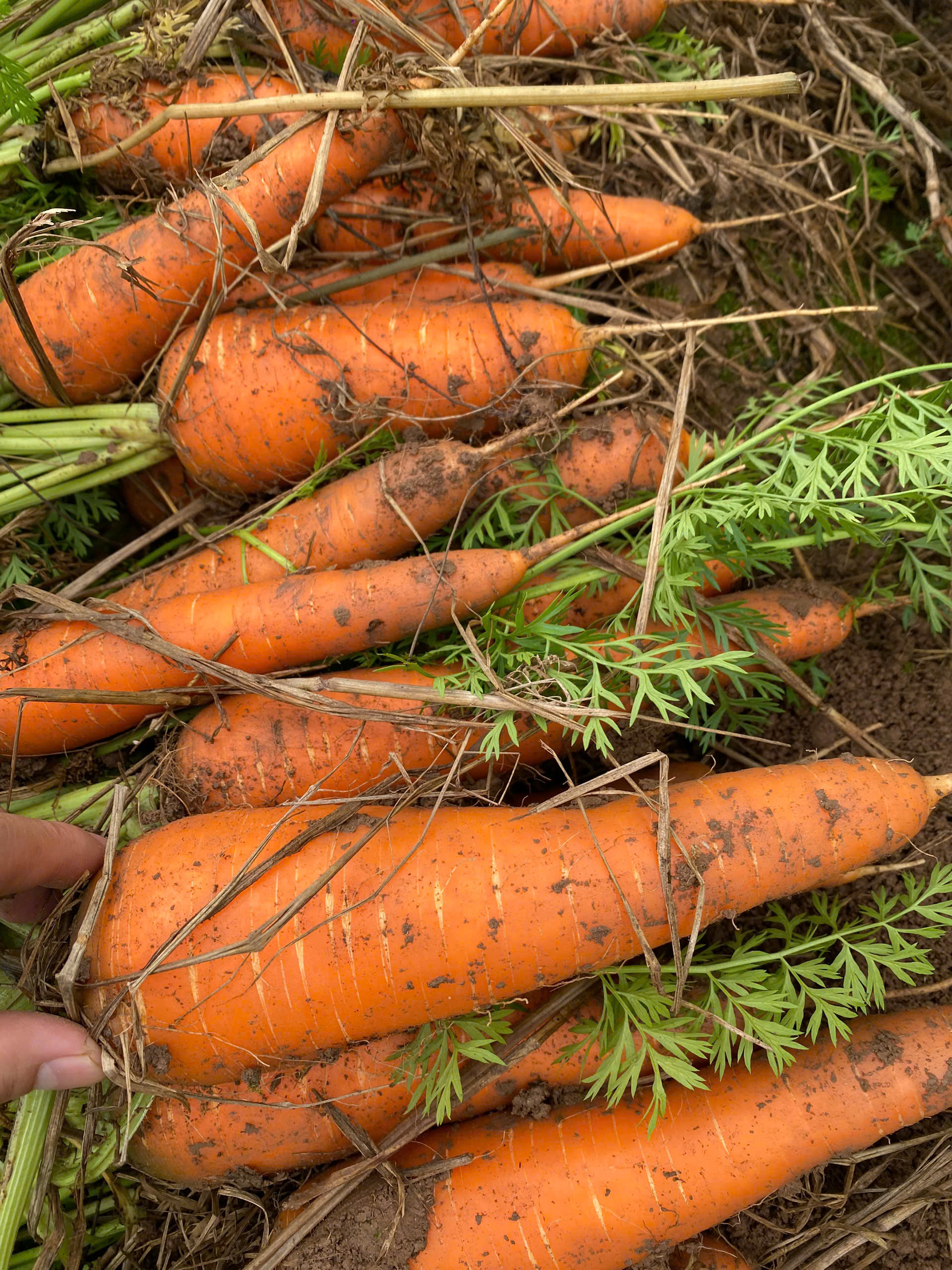
Fresh carrots are highly perishable and sensitive to temperature, humidity, and transit conditions. Consequently, major import markets such as Japan, South Korea, and the European Union (EU) impose very high standards.
Core Requirements:
Zero pesticide residues exceeding the Maximum Residue Limits (MRLs).
Uniform appearance and aesthetic appeal.
Transparent traceability systems.
Unbroken cold chain management.
🌱 2. Standardized Batch Selection Process
2.1. Selection of Cultivation Areas
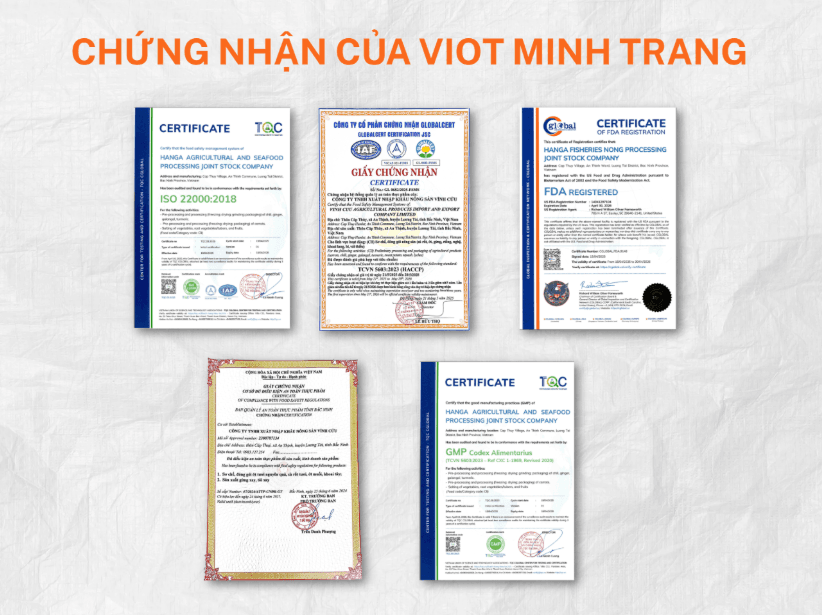
Choosing the right farm is the most critical step. Certified areas typically feature:
Valid Production Unit Codes (PUC).
Cultivation practices following VietGAP or GlobalGAP standards.
Comprehensive farming logs (field books).
Without these, exporting to premium markets is virtually impossible.
2.2. Field Inspection
Before purchasing, a direct assessment at the farm is mandatory:
Uniformity: Consistency in root size and shape.
Pest/Disease Rate: Minimal signs of infestation.
Average Size: Meeting the contract specifications.
👉 Pro-tip: If the export-standard yield is below 70%, it is not advisable to purchase that batch due to inefficiency.
🔍 3. Quality Control (QC) for Fresh Carrots
3.1. Physical/Appearance Standards
Export-grade carrots must feature:
Bright orange color (natural hue).
Straight roots without crooks or cracks.
No pest damage or mechanical bruising.
Uniform length and diameter.
3.2. Chemical Residue Testing
This is a mandatory step for international trade.
Testing Indicators: Pesticide residues, heavy metals, and microbiological contaminants.
Market Specifics: Markets like Japan have extremely low tolerance levels (MRLs), requiring stringent control from the planting stage.
3.3. Sampling and Lab Analysis
Process: Random sampling from the batch $\rightarrow$ Sending to ISO-certified labs $\rightarrow$ Comparing results with the target market’s standards.
👉 Note: Always complete testing before container loading to mitigate risks.
📦 4. Post-Harvest Handling and Packaging
4.1. Cleaning and Grading
Washing: Removing soil and debris using high-pressure water.
Trimming: Removing foliage/leaves.
Grading: Sorting by size (S, M, L, 2L).
4.2. Packaging
Common formats include:
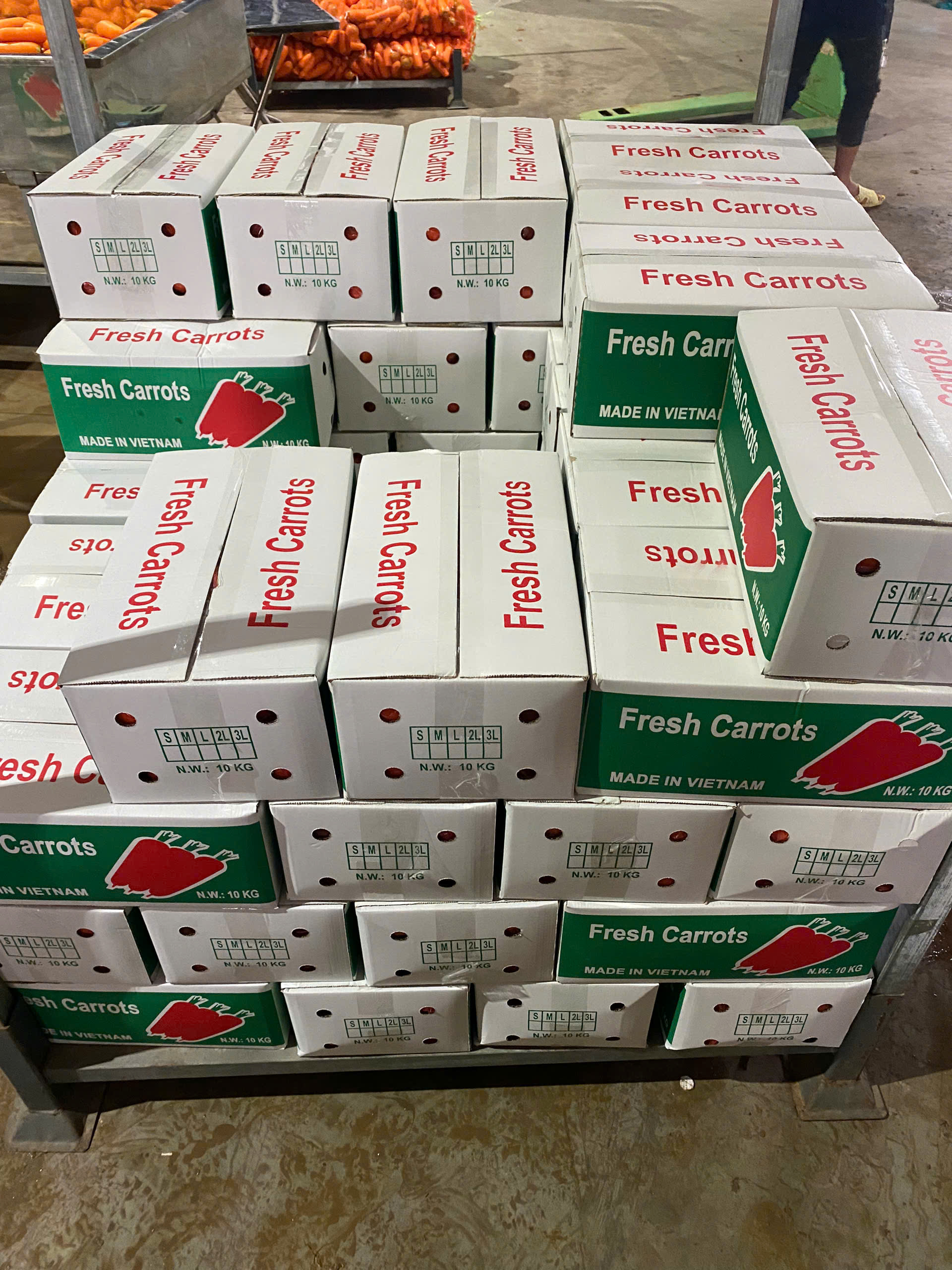
Mesh bags or Perforated PE bags.
Corrugated cartons (for premium markets).
Labeling requirements: Product name, Origin (Vietnam), PUC, and Packing Date.
✅ 5. Pre-Shipment Inspection (PSI)
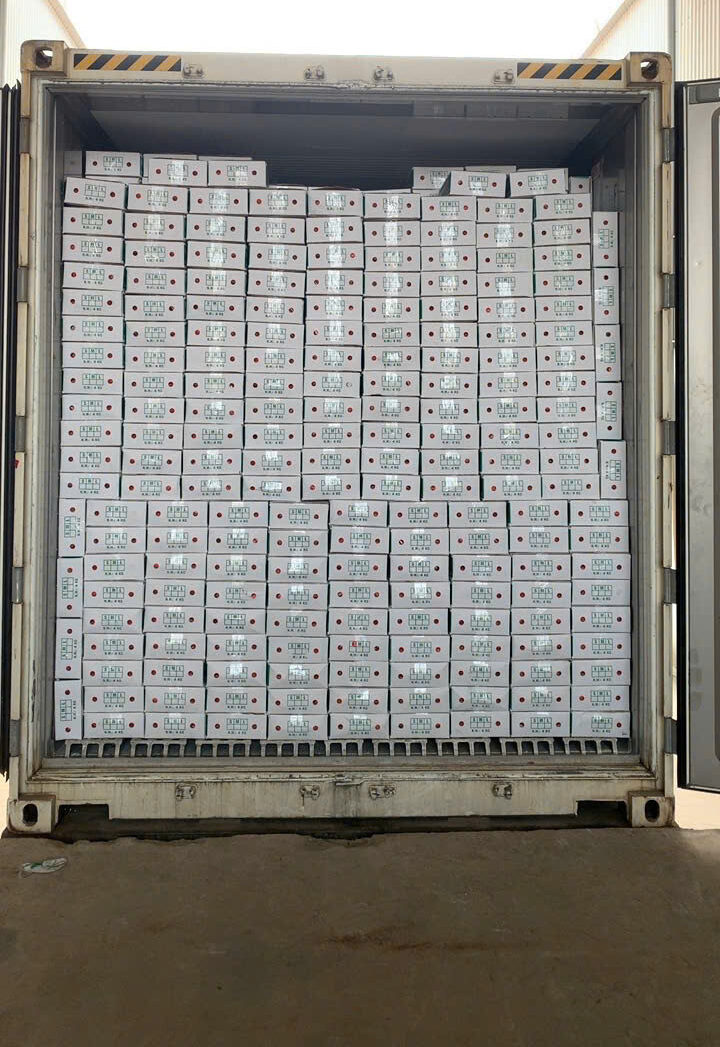
5.1. Inspection Checklist
Uniformity: $\ge 90\%$.
Integrity: Zero decayed or damaged roots.
Purity: No foreign matter or impurities.
Specifications: Strict adherence to contract dimensions.
5.2. Third-Party Monitoring
Many enterprises hire independent surveyors (e.g., SGS, Intertek) to ensure transparency and meet buyer requirements.
🔗 6. Traceability System
System Components: Every batch must be linked to its PUC, Packing House Code (PHC), and production logs.
Role: Vital for meeting import regulations, protecting brand reputation, and rapid crisis management.
❄️ 7. Cold Chain Management
Pre-cooling: Rapidly reducing the core temperature within 4–6 hours post-harvest.
Transportation: Utilizing reefer containers maintained at 0°C – 4°C with continuous temperature monitoring (Data Loggers).
⚠️ 8. Common Pitfalls
Neglecting pre-shipment residue testing.
Poor packaging quality leading to bruising.
Lack of verifiable traceability.
Cold chain breakage, causing wilting or rot.
💡 9. Field Experience
Implement QC from the “input” (seed and soil) stage.
Avoid “cheap” goods with inferior quality.
Maintain strong, long-term relationships with certified growers.
Stay updated on shifting market regulations.
🏁 Conclusion
Exporting fresh carrots is not just about trade; it is about managing a professional quality chain from farm to fork. Businesses must invest in processes, people, and systems to ensure international standards and maintain long-term prestige.
Would you like me to translate the “Sales Letter” for your 10-ton fresh carrot and 5-ton dehydrated carrot offer as well?




Tác giả Tưởng Mạnh Biên
Là chuyên gia giàu kinh nghiệm trong lĩnh vực xuất khẩu nông sản. Với nhiều năm làm việc, nghiên cứu và trực tiếp tham gia vào các hoạt động sản xuất, kinh doanh và xuất khẩu nông sản, tác giả chia sẻ những kiến thức chuyên môn sâu sắc cùng các bài học thực tiễn giá trị nhằm hỗ trợ doanh nghiệp.
- Địa chỉ: Số 27, Tổ 23, Lĩnh Nam, Hoàng Mai, Hà Nội
- Email: viotvietnam.vn@gmail.com
- SĐT: 0977 728 269