

 Tiếng Việt
As Vietnam’s fruit and vegetable sector continues to expand, international demand for Vietnamese fresh carrots is becoming more visible. In 2025, Vietnam’s fruit and vegetable export value exceeded USD 8.5 billion, the highest level on record. In January 2026 alone, fruit and vegetable exports reached USD 644.44 million, up 72.9% compared with the same period of the previous year. This growth shows that international markets are still creating strong opportunities for products with stable supply, consistent quality, and clear traceability, including carrot import export business from Vietnam.
For B2B buyers, the key question is not simply how to buy carrots, but how to secure the right carrot supply in Vietnam that can meet four important requirements at the same time: volume, seasonality, technical quality, and stable delivery. This is exactly what importers should understand before entering the Vietnamese fresh carrots market.
1. Where are carrots grown in Vietnam?
When discussing carrot supply in Vietnam, the most important production area today is still northern Vietnam, especially the large concentrated growing zones in Hai Phong. According to data from the 2025–2026 winter crop, this area has around 1,300 hectares of carrots, with an estimated output of 65,000–70,000 tons. Another local source reported output at around 75,000 tons, with more than 80% of production serving export markets. Major destinations include South Korea, Japan, Thailand, Malaysia, and Middle Eastern countries.
The strength of this northern region lies in its large, concentrated production, which is suitable for B2B orders that require uniform volumes and stable shipments during the peak harvest season. In addition, traditional carrot-growing areas such as Duc Chinh continue to play an important role in the carrot import export chain. According to agricultural reports, Hai Duong Province previously cultivated around 1,500 hectares of carrots, with annual production of 80,000–100,000 tons. Duc Chinh Commune alone accounted for about 360 hectares, or roughly 25% of the total area, and around 40% of its output was exported to South Korea.
Besides northern Vietnam, Lam Dong is another area worth noting for importers who want to diversify sourcing or build a secondary supply base. In Xuan Tho Commune, there are around 125 hectares of carrot farming, with 22 VietGAP carrot production groups, and about 80% of the area organized under safe farming practices. More broadly, Lam Dong has around 55,000 hectares of safe vegetable production with traceability systems, and root vegetables such as carrots, radish, potatoes, and onions are an important part of this structure.
2. What is the carrot season in Vietnam?
Seasonality is one of the most important factors in carrot import export, because it directly affects price, supply stability, and the ability to secure long-term contracts.
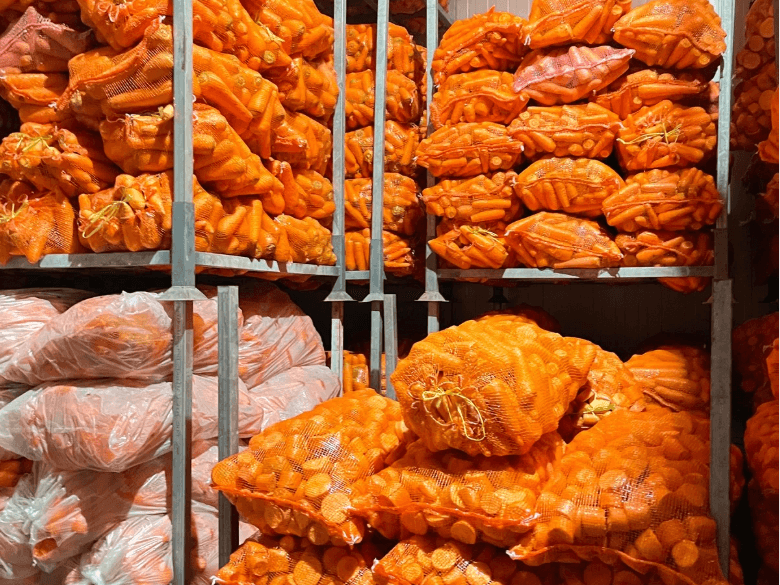
In northern Vietnam, the main season for Vietnamese fresh carrots usually begins with planting from October 1 to October 20, while harvesting takes place from late January to April of the following year. This is the period when supply is at its highest, making it ideal for export orders to Northeast Asia, Southeast Asia, and the Middle East. If buyers need large volumes, competitive prices, and fast consolidation, this is the season they should prioritize.
In Lam Dong, however, carrot production is more flexible. Farmers in Xuan Tho can cultivate carrots three times a year, and each crop takes around 3.5 months to harvest. This gives buyers an advantage when they want to split procurement plans across the year or maintain supply outside the northern peak season.
In other words, if approached correctly, importers can develop a two-layer carrot supply in Vietnam strategy: northern Vietnam for large seasonal volumes, and Lam Dong for flexibility and supplementary sourcing.
3. What kind of carrots should buyers look for for export?
This is the most important question for companies searching for Vietnamese fresh carrots. In reality, not every carrot is suitable for export. For B2B trade, buyers need uniform, clean, stable products with manageable technical documentation.
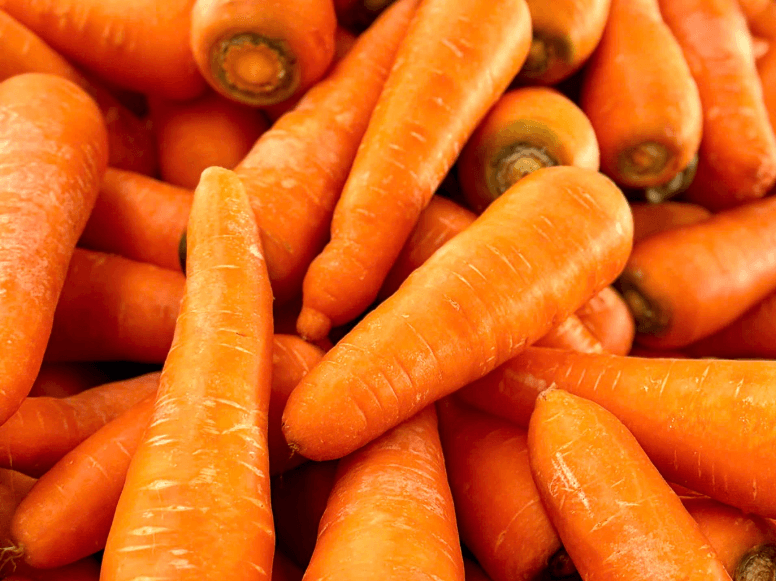
According to USDA trade references for fresh carrots, a good shipment should consist of roots that are firm, clean, reasonably uniform in color, and fairly well-shaped, without serious defects such as cracking, decay, pest damage, or internal discoloration. For good-quality carrots, the diameter is often around 1.9–3.8 cm, while the minimum length is approximately 12.7 cm. These are useful reference points for importers when building a clear purchasing specification.
However, in practical carrot import export operations, buyers should not rely only on size. They should confirm at least six technical points at the beginning: whether the carrots are washed or unwashed, root color, lot uniformity, acceptable defect ratio, packing method, and traceability requirements. This is especially important because markets such as Japan and South Korea are increasingly strict about phytosanitary controls, pesticide residues, food safety, and traceability. In fact, according to reports from Hai Phong, under tighter Korean inspection requirements, 100% of carrot export shipments must be tested for pesticide residues before departure.
For B2B buyers, the right product is therefore not the cheapest carrots available, but carrots that can enter the target market smoothly, maintain quality during transport, and reduce customs or compliance risks.
4. Where are the suppliers and how should importers approach them?
When looking for fresh carrot suppliers in Vietnam, importers should prioritize suppliers that are directly connected to major growing regions in the north and that can organize washing, sorting, and post-harvest handling. A practical example from Duc Chinh shows how much difference professional handling can make: one cooperative there invested in a processing facility of nearly 1,000 square meters, an automatic washing line, a grading system with a capacity of 25 tons per day, and low-temperature storage. As a result, post-harvest handling became more stable, and farmers’ income reportedly increased by 15–20%.
From a B2B purchasing perspective, the most effective sourcing approach involves three steps.
First, define the requirements clearly: target market, size preference, packing format, delivery terms, and shipment schedule.
Second, verify the supplier’s sourcing capacity: growing area, weekly volume, product consolidation ability, post-harvest handling, cold storage, and traceability.
Third, request shipment-related information before confirming orders: real product photos, grading standards, production records if available, and information about pesticide residue testing or phytosanitary inspection.
This approach helps importers do more than just buy Vietnamese fresh carrots. It helps them build a sustainable procurement chain suitable for long-term cooperation.
5. Conclusion: To secure reliable fresh carrot supply, work with a supplier that understands the full supply chain
The Vietnamese fresh carrots market offers clear advantages in terms of production volume, seasonality, and the ability to serve demanding export markets when sourcing is managed properly. Northern Vietnam remains the center of the country’s carrot supply in Vietnam, thanks to its large output, high export ratio, and well-defined harvest calendar. Lam Dong is also a valuable complementary source for buyers who need more flexibility.
However, in carrot import export, success is determined not only by the growing region, but also by the supplier’s ability to organize the process from farm to packing, from product quality to shipment documentation.
If you are looking for a reliable carrot supply in Vietnam for B2B sourcing, and need support in finding the right season, specifications, and export-ready quality, contact VIOT for consultation and suitable sourcing solutions.
VIOT Contact Information
MINH TRANG VIOT AGRICULTURE SEAFOOD IMPORT AND EXPORT JOINT STOCK COMPANY
Office: No. 27, Group 23, Linh Nam, Hanoi, Vietnam
Warehouse: Hanga Agricultural and Seafood Processing Joint Stock Company – Cap Thuy, An Thinh, Bac Ninh, Vietnam
Phone: +84 977 728 269
Email: viotvietnam.vn@gmail.com
#VietnameseFreshCarrots #CarrotSupplyInVietnam #CarrotImportExport #FreshCarrotSuppliersInVietnam #VietnamCarrotExport #B2BAgriculture #VietnamVegetableExport #VIOT




Tác giả Tưởng Mạnh Biên
Là chuyên gia giàu kinh nghiệm trong lĩnh vực xuất khẩu nông sản. Với nhiều năm làm việc, nghiên cứu và trực tiếp tham gia vào các hoạt động sản xuất, kinh doanh và xuất khẩu nông sản, tác giả chia sẻ những kiến thức chuyên môn sâu sắc cùng các bài học thực tiễn giá trị nhằm hỗ trợ doanh nghiệp.
- Địa chỉ: Số 27, Tổ 23, Lĩnh Nam, Hoàng Mai, Hà Nội
- Email: viotvietnam.vn@gmail.com
- SĐT: 0977 728 269